Vacuum garbage transport
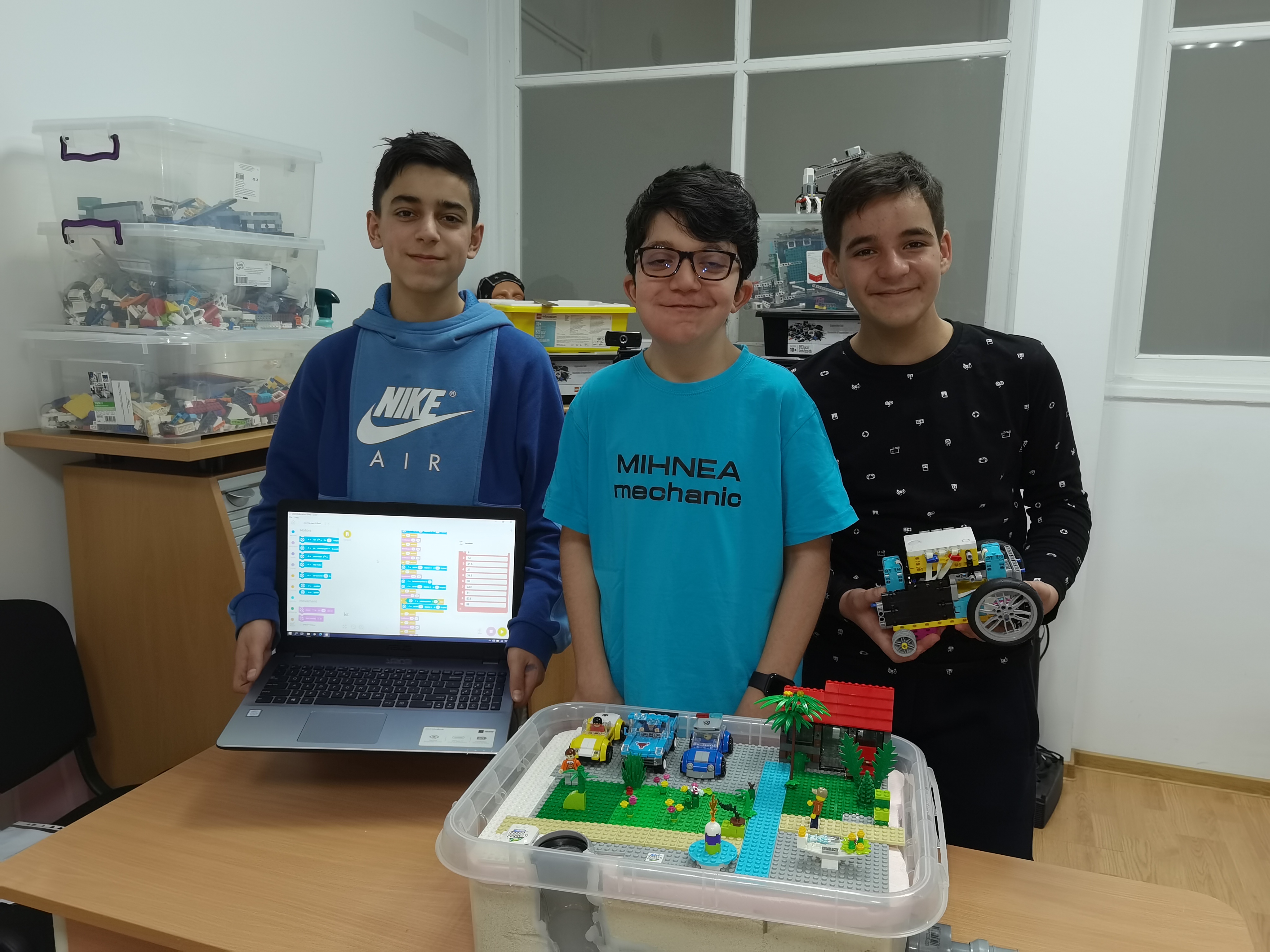
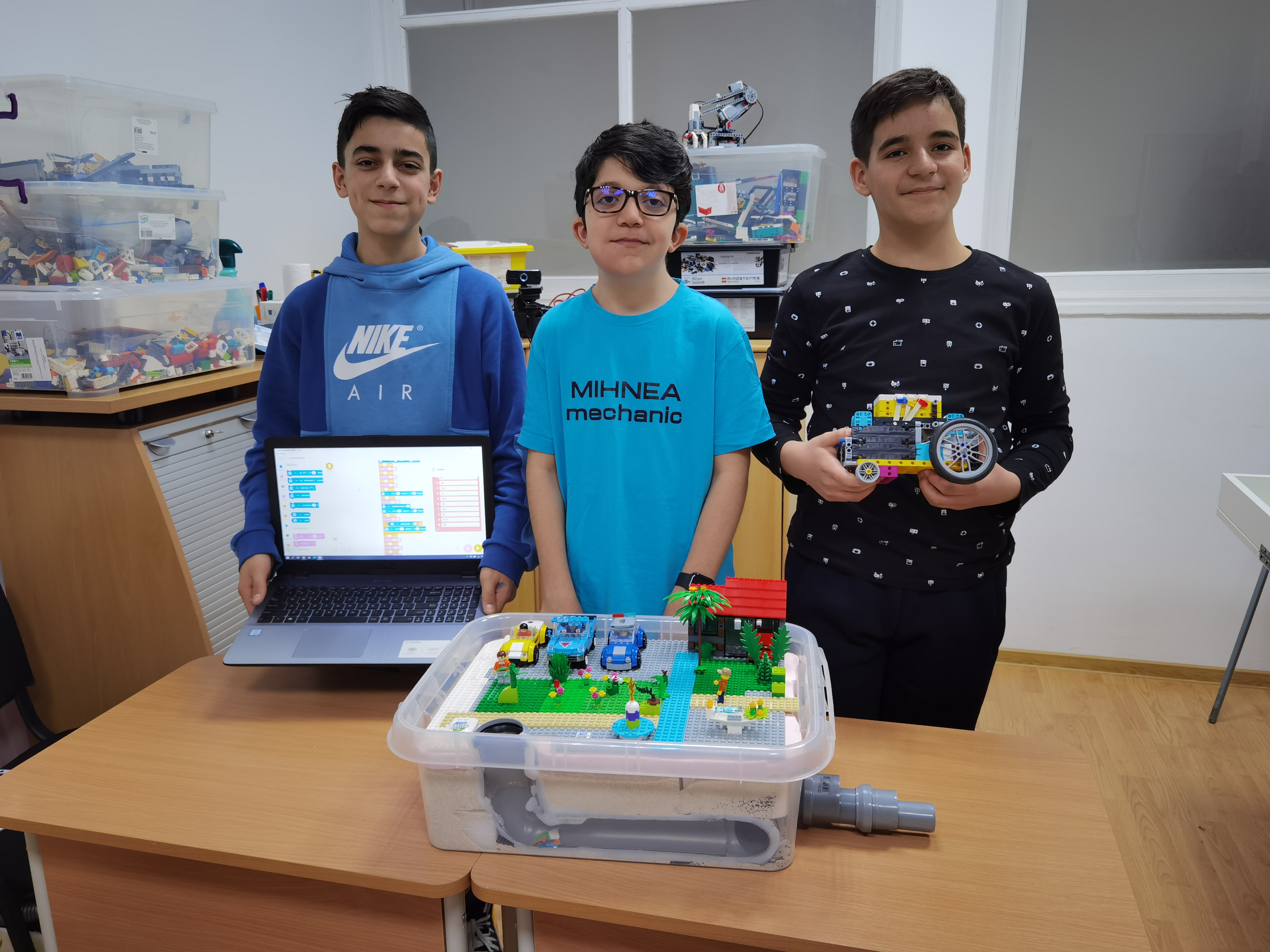
Team: Mihnea, Cosmin, Andrei
Awards:
1st Place Innovation Project, First Lego League Regional Stage, Bucharest 27.03.2022,
2nd Place Innovation Project, First Lego League National Stage, Romania, 10.04.2022.Contact: iulian@inventikaplace.ro
Our team's research project, Inventika Storm, is about the transport of garbage through an underground network of vacuum pipes.
This season's proposed theme was quite complex, and we searched extensively until we found a subject we could tackle. After discussing other possible themes such as:
- Applications that could improve parcel transportation;
- Or an electromagnetic system that could launch rockets into outer space; we settled on a topic that concerns us all, namely garbage transportation.
Each of us has encountered garbage trucks in our city, and most often, these encounters are not pleasant. The trucks block narrow streets during peak hours, foul-smelling substances leak from them, and sometimes they don't arrive on time, leading to garbage piling up on the streets and becoming a health hazard for residents.
Statistics show that in Romania, 2.55 million tons of food are thrown away annually. And these are just a small part of the waste produced in our homes. So, we tried to think about how we could improve the transportation of this waste from our homes to the sites where garbage can be sorted and recycled.
One of us remembered seeing in Metro stores a system where money is transported from cash registers to offices using a vacuum tube system. Then we began researching whether such a system could be used to transport other materials. This is how we learned that there are pilot projects studying the issue and that its construction is possible.
After discussing with Mihaela Popa from ADP Sector 4 about how garbage is currently transported, we consulted with Mr. Engineer Cristian Stanescu, who explained how such a system could work.
It would involve a network of tunnels, up to 150 centimeters in diameter, built deep enough not to interfere with other utilities, connecting all the garbage chutes from apartment blocks. In residential areas, access points could be placed at street corners where garbage could be thrown. These access points would need automated airlocks to maintain the vacuum in the system. The pipes would be connected to pumping stations outside the city, where the garbage would accumulate, then be sorted and sent to recycling centers.
This system would allow for the rapid transport of household waste out of the city, reducing pollution and traffic in the city and making the city much more hygienic as spoiled food would not sit in bins for a week until collected, and it would reduce the number of rats and other animals that can transmit diseases.
It's hard for us to estimate how expensive such a system would be and how long its implementation would take, but we believe it would be a significant advancement and that, in the long run, its costs would be amortized.
We discussed our idea with our schoolmates and with the SensorOn robotics team, and everyone who heard it told us it was a good idea and that it deserves to be implemented as soon as possible.
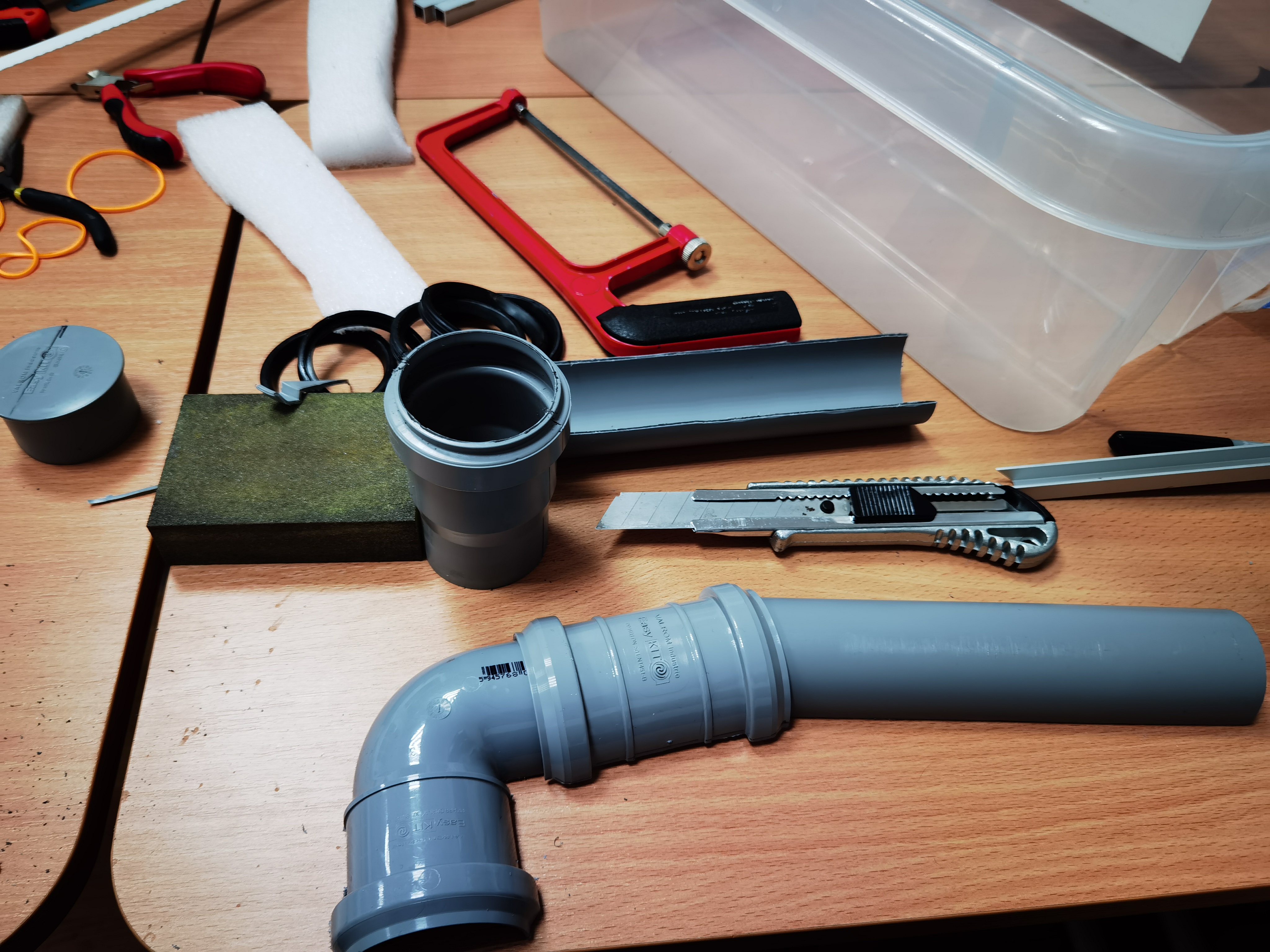
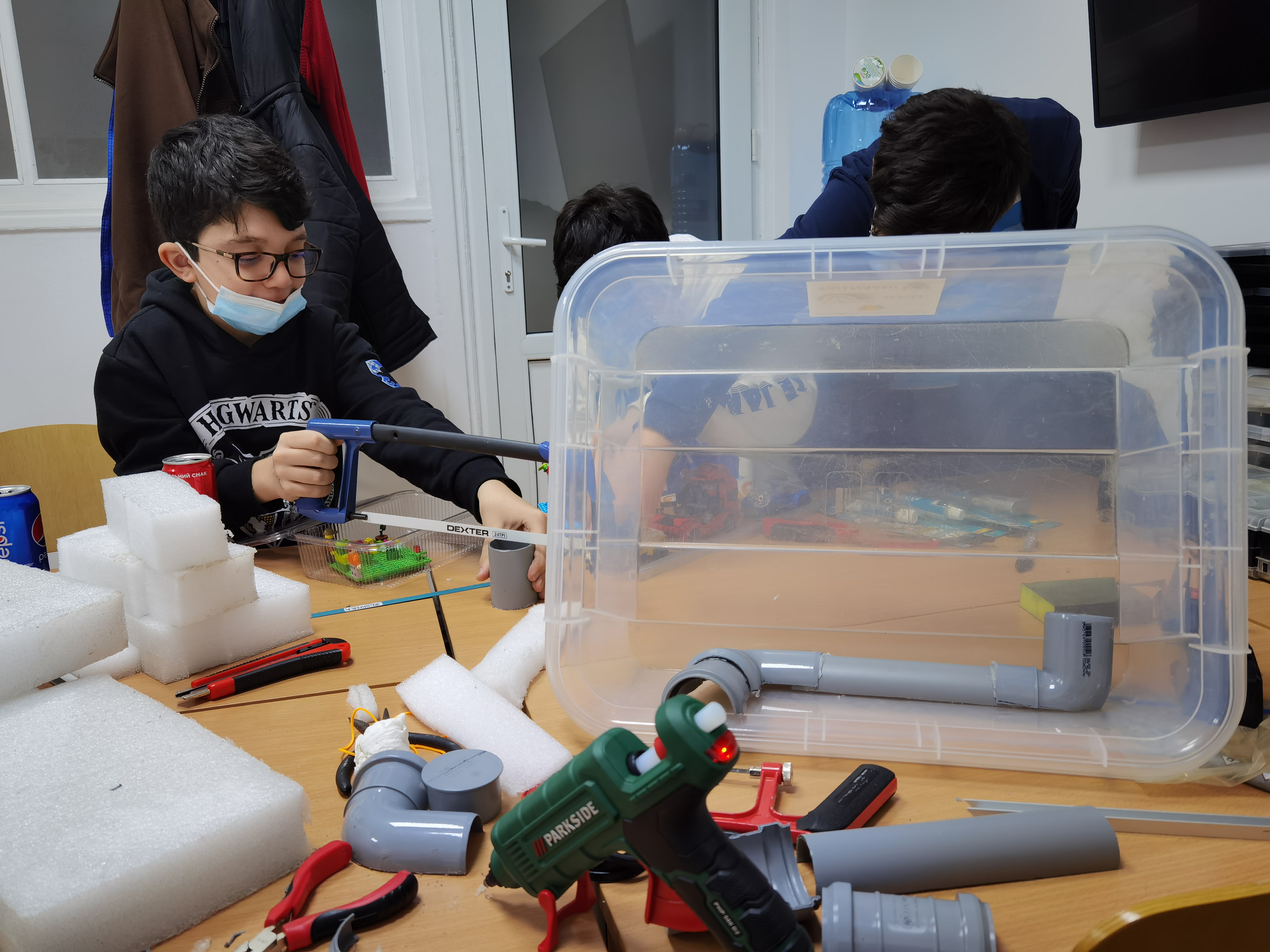
To demonstrate the idea of this system, we built this model showing how the proposed system should work.